
Business
Oil Prices Rise Amid Geopolitical Tensions and LNG Demand Surge

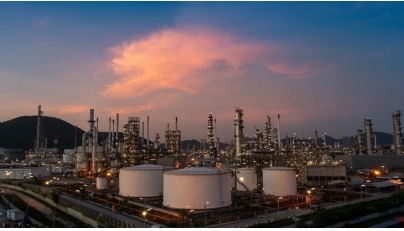
Oil prices experienced an uptick on Friday as investors adjusted their positions ahead of the Martin Luther King holiday weekend in the United States. Concerns regarding a potential US military strike against Iran also contributed to the increase. Brent crude futures settled at $64.13 per barrel, while US West Texas Intermediate (WTI) crude closed at $59.44. For the week, Brent recorded a rise of 1.2%, with WTI gaining 0.5%, according to the Al-Attiyah Foundation in its Weekly Energy Market Review.
The US Navy’s aircraft carrier, the USS Abraham Lincoln, is expected to arrive in the Persian Gulf this week after its operations in the South China Sea. Investors remain anxious that escalating tensions could lead Iran to block the Strait of Hormuz, a vital chokepoint for approximately a quarter of global seaborne oil supplies.
Despite these geopolitical concerns, analysts suggest that anticipated increases in global oil supply this year may limit the potential for a significant risk premium in prices.
Surge in LNG Prices Driven by Weather Outlook
In the liquefied natural gas (LNG) market, Asian spot prices climbed last week, reaching their highest levels in six weeks due to a forecast of colder weather that has spurred demand. The average LNG price for February delivery into northeast Asia was noted at $10.10 per million British thermal units (mmBtu), a slight increase from $9.50 per mmBtu the previous week.
Market activity has intensified, with Japan’s Kansai Electric and Tohoku Electric both seeking one cargo each for February-March delivery in anticipation of a cold snap in Northeast Asia later this month. This surge in tenders indicates a proactive approach by utilities to secure supply amid changing weather patterns.
In Europe, the situation remains equally dynamic. The Dutch TTF gas price settled at $12.73 per mmBtu, marking a weekly gain of 31.3%. This increase is attributed to the return of colder weather across the region, which has accelerated withdrawals from gas storage facilities. The depletion of underground gas reserves in several northwestern European countries has resulted in significantly higher prices compared to those in Asia.
As the energy landscape continues to evolve, both investors and consumers are closely monitoring the developments in oil and LNG markets, with geopolitical tensions and weather conditions shaping the dynamics of supply and demand.











Taranaki Indoor Cricket Centre Expansion Enhances Training Facilities

Israel Launches Extensive Strikes Amid Escalating Iran Conflict

Black Caps Battle South Africa for T20 World Cup Final Spot

House Prices Rise Modestly, Indicating Potential Market Shift

Call of Duty Introduces Black Ops Royale: Fans React Enthusiastically

PSG Strikers Dembele and Doue Nominated for Laureus Awards

Malayali Community Celebrates Unity at Mohanam 2026 Event

Trump’s Military Strategy Faces Backlash Amid Iranian Resistance

Auckland FC Faces Injury Crisis Without Fitness Coach

Community Mourns Teens Lost in Mount Maunganui Landslide

Tributes Pour In for Lachlan Rofe, Reality Star, Dead at 47

Private Funeral Held for Dean Field and His Three Children

Funeral Planned for Field Siblings After Tragic House Fire

Netball New Zealand Stands Down Dame Noeline Taurua for Series

Julian Dennison Ties the Knot with Christian Baledrokadroka in New Zealand

New ‘Maverick’ Chaser Joins Beat the Chasers Season Finale

Silver Ferns Legend Laura Langman Criticizes Team’s Attitude

Eli Katoa Rushed to Hospital After Sideline Incident During Match
-
 Top Stories1 month ago
Community Mourns Teens Lost in Mount Maunganui Landslide
-
 Entertainment6 months ago
Tributes Pour In for Lachlan Rofe, Reality Star, Dead at 47
-
 World3 months ago
Private Funeral Held for Dean Field and His Three Children
-
 Top Stories3 months ago
Funeral Planned for Field Siblings After Tragic House Fire
-
 Sports6 months ago
Netball New Zealand Stands Down Dame Noeline Taurua for Series
-
 Entertainment1 month ago
Julian Dennison Ties the Knot with Christian Baledrokadroka in New Zealand
-
 Entertainment5 months ago
New ‘Maverick’ Chaser Joins Beat the Chasers Season Finale
-
 Sports6 months ago
Silver Ferns Legend Laura Langman Criticizes Team’s Attitude
-
 Sports4 months ago
Eli Katoa Rushed to Hospital After Sideline Incident During Match
-

 Sports4 months ago
All Blacks Star Damian McKenzie and Partner Announce Baby News
-

 Sports3 months ago
Nathan Williamson’s Condition Improves Following Race Fall
-

 Politics5 months ago
Netball NZ Calls for Respect Amid Dame Taurua’s Standoff