
Business
US Farmers Grapple with Trade Challenges and Government Aid


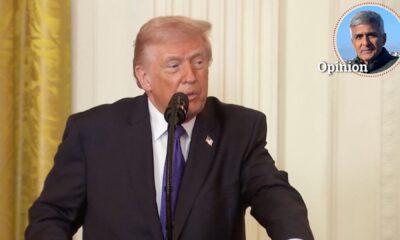
Farmers across the United States are facing significant challenges due to trade disputes and fluctuating commodity prices, exacerbated by recent tariffs imposed by the Trump administration. In response to the ongoing pressures, President Donald Trump announced a plan to allocate $12 billion in one-time payments aimed at providing relief to those affected by these economic conditions.
Gene Stehly, a farmer in Randolph, Minnesota, expressed his concerns about the implications of tariffs on his sales of corn, soybeans, and wheat. “When Trump promised new tariffs, I worried that trade disputes would jeopardize my international sales,” he said. Stehly’s fears have materialized, and he believes the federal assistance will not adequately cover the losses incurred by American farmers.
Mixed Reactions to Financial Aid
President Trump’s announcement on Monday included plans for financial support for farmers who have been grappling with low commodity prices, rising costs, and decreased sales following China’s halt on agricultural imports from the U.S. During his first term, Trump implemented similar measures, yet many farmers view this latest aid as a temporary solution rather than a long-term fix.
Charlie Radman, a fourth-generation farmer in the same region, described the aid as a “bridge” that fails to provide the stability the agricultural sector urgently needs. “What we really want is more certainty, not to rely on these ad hoc payments,” Radman noted. Despite these frustrations, support for Trump remains strong among farmers, with many acknowledging the complexities of securing fair trade deals.
Garrett Love, a sorghum farmer from Kansas, who attended the aid announcement at the White House, remarked on the challenges farmers face in navigating trade negotiations. “We appreciate the lowering of tax burdens and regulations, and Trump has definitely done that,” Love stated.
Impact of Trade Disputes
U.S. soybean and sorghum farmers typically rely on exports for a substantial portion of their income. The trade conflict with China has hit these producers particularly hard, as China has shifted its focus to sourcing from Brazil and other South American countries. While Trump and his administration have touted a deal with Chinese President Xi Jinping, concerns remain about the execution of this agreement.
“In general, I don’t trust their motives and integrity of their promises,” stated Bryant Kagay, a farmer from northwest Missouri.
As of now, China has purchased only about one-quarter of the 12 million metric tons of soybeans that U.S. officials projected would be sold by the end of February 2020. This has led to skepticism regarding the Chinese government’s commitment to future purchases, including a pledge to acquire 25 million metric tons annually over the next three years.
Farmers like Glen Groth are advocating for a broader focus on opening markets beyond China. “We need to look for other international buyers and expand domestic uses for our products like biodiesel and ethanol,” he said. Dan Keitzer, a farmer from southeast Iowa, echoed this sentiment, emphasizing the need for increasing demand rather than government checks to sustain their livelihoods.
In the past, Trump’s administration provided substantial financial assistance to farmers, totaling $22 billion in 2019 and $46 billion in 2020, primarily in response to trade disputes and the economic fallout from the COVID-19 pandemic. However, many farmers remain unconvinced that the latest $12 billion will address their long-term concerns.
The aid payments, which are expected to arrive by the end of February, will be capped at $155,000 per farmer or entity, targeting those with adjusted gross incomes below $900,000. Past experiences have shown that some larger farms have successfully navigated around these payment limits to receive substantial funds, raising questions about the distribution’s fairness.
Amid these ongoing challenges, farmers are also urging the administration to address the rising costs of inputs, which are significantly impacting their profitability. Trump signed an executive order directing the Justice Department and Federal Trade Commission to investigate anti-competitive practices throughout the food supply chain, starting with critical inputs like fertilizer and seed.
Tregg Cronin, a farmer from central South Dakota, expressed gratitude for the president’s acknowledgment of the struggles faced by farmers caught in the trade war. However, he cautioned that any government checks received are likely to be quickly absorbed by rising operational costs. “Any money we get will probably just go right back out the door,” he said.
As farmers navigate these turbulent waters, they remain hopeful that improved trade conditions and market access will lead to a more stable future.











Tragic Tractor Incidents Prompt Safety Warnings in Farming

New Zealand’s Cyber Security Faces Urgent Overhaul Amid Threats

Britney Spears Arrested for Suspected DUI in California

David Seymour Advocates for Growth in New Zealand’s Cannabis Exports

Community Unites for Suicide Awareness Through Memorable Events

Understanding New Zealand’s Position in a Multipolar World

Kiwis Make Early Impact at Japan-Australasia Championship in Auckland

Kiwi Couple Spends $60,000 to Escape Conflict in Dubai

TradeMe Sells Decision Sparks Debate on Campground Costs

Community Mourns Teens Lost in Mount Maunganui Landslide

Tributes Pour In for Lachlan Rofe, Reality Star, Dead at 47

Private Funeral Held for Dean Field and His Three Children

Funeral Planned for Field Siblings After Tragic House Fire

Netball New Zealand Stands Down Dame Noeline Taurua for Series

Julian Dennison Ties the Knot with Christian Baledrokadroka in New Zealand

New ‘Maverick’ Chaser Joins Beat the Chasers Season Finale

Silver Ferns Legend Laura Langman Criticizes Team’s Attitude

Eli Katoa Rushed to Hospital After Sideline Incident During Match
-
 Top Stories1 month ago
Community Mourns Teens Lost in Mount Maunganui Landslide
-
 Entertainment6 months ago
Tributes Pour In for Lachlan Rofe, Reality Star, Dead at 47
-
 World3 months ago
Private Funeral Held for Dean Field and His Three Children
-
 Top Stories3 months ago
Funeral Planned for Field Siblings After Tragic House Fire
-
 Sports6 months ago
Netball New Zealand Stands Down Dame Noeline Taurua for Series
-
 Entertainment1 month ago
Julian Dennison Ties the Knot with Christian Baledrokadroka in New Zealand
-
 Entertainment5 months ago
New ‘Maverick’ Chaser Joins Beat the Chasers Season Finale
-
 Sports6 months ago
Silver Ferns Legend Laura Langman Criticizes Team’s Attitude
-
 Sports4 months ago
Eli Katoa Rushed to Hospital After Sideline Incident During Match
-

 Sports4 months ago
All Blacks Star Damian McKenzie and Partner Announce Baby News
-

 Sports3 months ago
Nathan Williamson’s Condition Improves Following Race Fall
-

 Politics5 months ago
Netball NZ Calls for Respect Amid Dame Taurua’s Standoff