
Science
Renowned Scientist Gordon Lauder Dies at 94, Leaving Legacy

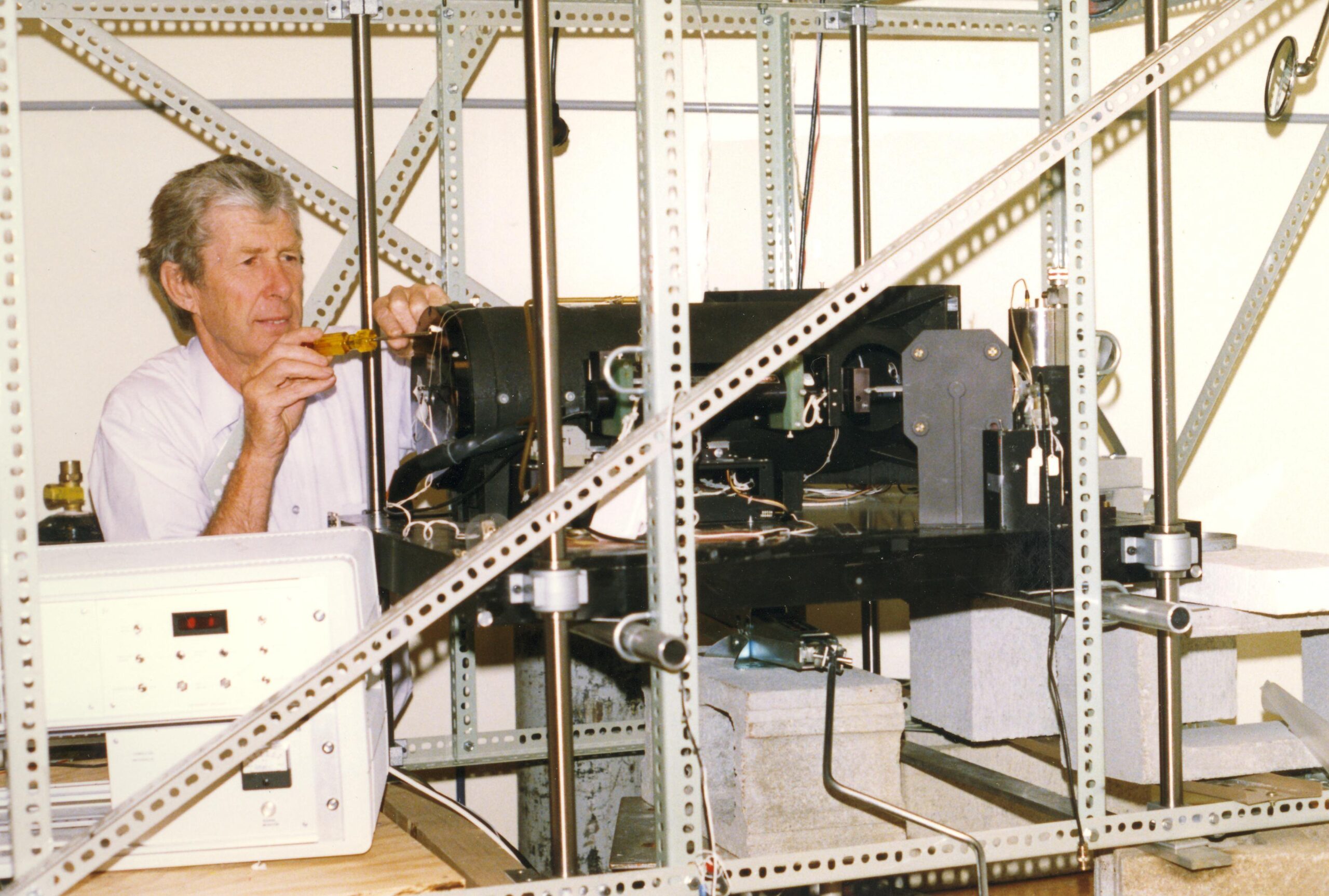
Gordon Lauder, a celebrated scientist known for his extensive work in atmospheric and Antarctic research, passed away on November 6, 2025, just shy of his 95th birthday. His pioneering contributions spanned several decades and included significant advancements in understanding the Earth’s atmosphere, solar activity, and ozone depletion.
Lauder began his academic journey at Mt Albert Grammar before attending the University of Auckland. His career took him to diverse locations, from the Arctic to the Antarctic, where he investigated various phenomena within the Earth’s crust and atmosphere. His multifaceted research included mineral prospecting using radioactivity, gravity fields, and magnetic field anomalies. Additionally, he measured atmospheric conditions to assess the impact of solar activity on the Earth’s ionosphere and magnetic field.
Significant Contributions and Recognitions
Lauder’s career was marked by a deep commitment to Antarctic research, beginning in 1967. His investigations into the interactions between solar radiation and the atmosphere were pivotal in establishing navigation and communication standards in the region. Over the years, his work contributed significantly to the understanding of the causes of the Antarctic ozone hole, an issue that gained prominence in the late 20th century.
His contributions were recognized in several notable ways. In 1994, he was invited to discuss New Zealand’s atmospheric research contributions with Prince Charles at the Antarctic Centre in Christchurch. A year later, he received the Royal Society of New Zealand’s Science and Technology Silver Medal. In 2001, the New Zealand Geographical Board honoured him by naming Keys Hill, near Scott Base, in his name.
Lauder served as president of the New Zealand Institute of Physics in the mid-1980s and earned a MSc in physics with distinction from the University of Otago in 1993. His association with the DSIR Auroral Station, now part of Niwa (formerly known as the National Institute of Water and Atmospheric Research), spanned over 35 years, during which he held leadership positions.
A Life Beyond Science
In addition to his scientific legacy, Lauder was a devoted family man. He met his wife, Rima, in Rarotonga, where they married and raised three children: John, Christina, and Geoffrey. His family life was enriched by shared experiences, including a remarkable adventure detailed in his book, Stranded in Paradise, published in 2016. This work recounts his efforts in salvaging propeller blades from the wreck of the RMS Maitai, which sank nearly a century earlier.
Lauder was also an accomplished musician and actively engaged in community affairs. He directed musical performances for the Omakau Musical Society and contributed to the local Art Society and the Rotary Club of Alexandra for three decades, including terms as president. His love for sports continued into his 90s, with a particular passion for tennis, which he played well into his later years.
He was remembered fondly at his farewell at Orchard Garden, Alexandra, attended by friends and family. Rima, who passed away three years prior, and their son John, who died young, were also commemorated during the service. Lauder is survived by his son Geoffrey, daughter Christina Parker, and grandchildren John and Camille, along with great-grandson Roimata.
Gordon Lauder’s profound impact on science, community, and family will resonate for generations to come, a testament to a life dedicated to exploration, innovation, and connection.










New $25 Million Funding Boosts Hospital Capacity Ahead of Winter

Discover Sleep Space’s Affordable Bach Bed Packages Today

Jury Dismissed in Sexual Assault Trial Over Misguided Questions

Wellington’s New Gallery Unveils Community-Driven Art Exhibition

All Whites Face Challenges as Injuries Strike Before World Cup

Heroic Bystander Rescues Swimmers from Dangerous Surf in Napier

Nina Oyama Returns to Crime Comedy in Deadloch Season 2

China Southern Airlines Offers Reliable Journey from Auckland to Vietnam

Nina Oyama Returns to Deadloch for Anticipated Season 2

Community Mourns Teens Lost in Mount Maunganui Landslide

Tributes Pour In for Lachlan Rofe, Reality Star, Dead at 47

Private Funeral Held for Dean Field and His Three Children

Funeral Planned for Field Siblings After Tragic House Fire

Netball New Zealand Stands Down Dame Noeline Taurua for Series

Julian Dennison Ties the Knot with Christian Baledrokadroka in New Zealand

Auckland’s Average Rent Surpasses $700 for Three-Bedroom Homes

Al Waha Motors Opens Flagship Jetour Showroom in Al Khor

New Research Reveals Simple Path to Enhanced Happiness
-
 Top Stories6 months ago
Community Mourns Teens Lost in Mount Maunganui Landslide
-
 Entertainment11 months ago
Tributes Pour In for Lachlan Rofe, Reality Star, Dead at 47
-
 World8 months ago
Private Funeral Held for Dean Field and His Three Children
-
 Top Stories8 months ago
Funeral Planned for Field Siblings After Tragic House Fire
-
 Sports11 months ago
Netball New Zealand Stands Down Dame Noeline Taurua for Series
-
 Entertainment6 months ago
Julian Dennison Ties the Knot with Christian Baledrokadroka in New Zealand
-
 Business7 months ago
Auckland’s Average Rent Surpasses $700 for Three-Bedroom Homes
-
 Health6 months ago
Al Waha Motors Opens Flagship Jetour Showroom in Al Khor
-
 Science9 months ago
New Research Reveals Simple Path to Enhanced Happiness
-

 Entertainment10 months ago
New ‘Maverick’ Chaser Joins Beat the Chasers Season Finale
-

 Lifestyle10 months ago
Maia Wilson Faces Backlash Following Taurua’s Suspension
-

 Sports9 months ago
All Blacks Star Damian McKenzie and Partner Announce Baby News