
Sports
New Zealand Sprinters Unite for Relay Success in Australia

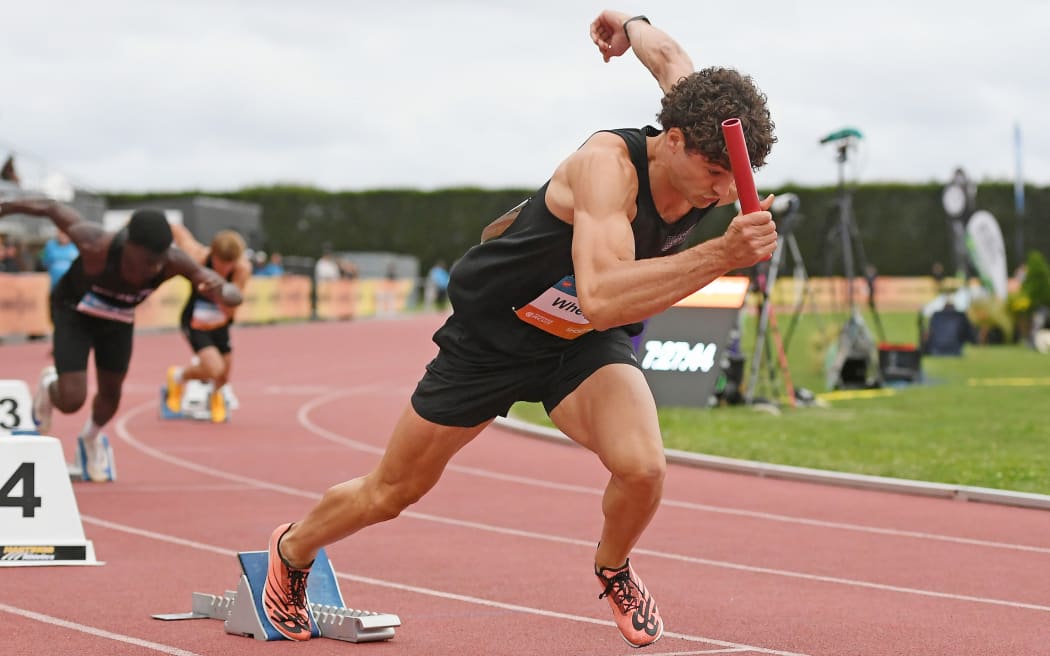
New Zealand’s elite sprinters are seizing control of their international aspirations by participating in a unique training initiative aimed at enhancing their relay performance. Following the recent switch of national record-holder Eddie Osei-Nketia to represent Australia, a group of seventeen sprinters from New Zealand has traveled to the Gold Coast to attend an Australian national sprint camp focused on relays. This initiative, dubbed ‘Black Batons’, is designed to bolster their chances for selection in the upcoming Commonwealth Games and World Championships.
The camp, which took place this month, was made possible through a collaboration with Athletics Australia. The New Zealand athletes funded their own participation, tapping into Australian resources to enhance their training. The program is led by coaches Nuree Greenhalgh and Sonia Waddell, both of whom have impressive backgrounds in athletics. Greenhalgh, a former junior champion, has emerged as a prominent mentor, guiding athletes to national records, while Waddell boasts a storied career across multiple sports, including rowing and cycling.
Greenhalgh explained the motivation behind the initiative, stating, “We reached out to David Reid at Athletics Australia, just to find out about his relay programme, because after three years, it’s been really successful.” She highlighted that the Australian team invited them to bring a relay squad to compete, creating a mutually beneficial arrangement.
Australian sprinters have recently achieved significant success in relay events, including a bronze medal for their women’s 4x400m team at the World Indoor Championships in Nanjing, China, last March. They also secured second place in the mixed 4x400m at the World Relays in Guangzhou, China, showcasing the strength of their relay program.
The New Zealand athletes trained alongside their Australian counterparts, engaging in tactical sessions and video analysis. Notably, a men’s 4x100m team comprising Tiaan Whelpton, Hayato Yoneto, Shay Veitch, and Revell-Lewis came within one-tenth of a second of breaking a national record, almost catching Osei-Nketia in the process. Another mixed 4x100m team clocked a time of 43.29 seconds, which would have placed them among the top 28 nations last year.
Despite New Zealand’s rich history in distance running, the nation has struggled to develop elite sprinters. The last New Zealander to reach an Olympic final in sprinting was Arthur Porritt, who won bronze in the 100 metres at the 1924 Olympics. The current landscape reveals a growing frustration among homegrown sprinters over limited international opportunities.
Greenhalgh noted, “In the past, relays have not worked in New Zealand. Athletes have been more individual-based and not committed to the relay.” She aims to create pathways for athletes who may not achieve individual success, allowing them to compete as a team.
Whelpton, who has represented New Zealand at multiple championships, initially expressed skepticism about the relay initiative. However, after engaging with Greenhalgh and Waddell, he became fully supportive, recognizing the depth of talent among the sprinters. “We could genuinely have quite a competitive team,” he stated, emphasizing the importance of mastering baton exchanges.
The New Zealand sprinting community has long been known for its resilience and adaptability. Whelpton remarked, “The Kiwis can improve their standing considerably through mastering the intangible.” This sentiment reflects a broader understanding that in relay events, teamwork and technique are just as crucial as raw speed.
Among the notable absentees from the relay program is Zoe Hobbs, who has established herself as one of the fastest women in Oceania. Greenhalgh emphasized the importance of allowing Hobbs to focus on her individual goals, particularly with the upcoming Commonwealth Games and World Championships on the horizon.
Athletics New Zealand has expressed support for the community-led initiative, acknowledging the efforts of passionate coaches. While financial contributions are limited, they are committed to ensuring relay opportunities at domestic events.
Looking ahead, the Oceania Championships represent a significant opportunity for these teams, with aspirations for qualification for the 2026 World Relay Championships and the Commonwealth Games. The collaborative efforts of New Zealand sprinters in Australia illustrate a new chapter in their pursuit of excellence on the world stage.













New $25 Million Funding Boosts Hospital Capacity Ahead of Winter

Discover Sleep Space’s Affordable Bach Bed Packages Today

Jury Dismissed in Sexual Assault Trial Over Misguided Questions

Wellington’s New Gallery Unveils Community-Driven Art Exhibition

All Whites Face Challenges as Injuries Strike Before World Cup

Heroic Bystander Rescues Swimmers from Dangerous Surf in Napier

Nina Oyama Returns to Crime Comedy in Deadloch Season 2

China Southern Airlines Offers Reliable Journey from Auckland to Vietnam

Nina Oyama Returns to Deadloch for Anticipated Season 2

Community Mourns Teens Lost in Mount Maunganui Landslide

Tributes Pour In for Lachlan Rofe, Reality Star, Dead at 47

Private Funeral Held for Dean Field and His Three Children

Funeral Planned for Field Siblings After Tragic House Fire

Netball New Zealand Stands Down Dame Noeline Taurua for Series

Al Waha Motors Opens Flagship Jetour Showroom in Al Khor

Julian Dennison Ties the Knot with Christian Baledrokadroka in New Zealand

Auckland’s Average Rent Surpasses $700 for Three-Bedroom Homes

New Research Reveals Simple Path to Enhanced Happiness
-
 Top Stories7 months ago
Community Mourns Teens Lost in Mount Maunganui Landslide
-
 Entertainment11 months ago
Tributes Pour In for Lachlan Rofe, Reality Star, Dead at 47
-
 World9 months ago
Private Funeral Held for Dean Field and His Three Children
-
 Top Stories9 months ago
Funeral Planned for Field Siblings After Tragic House Fire
-
 Sports11 months ago
Netball New Zealand Stands Down Dame Noeline Taurua for Series
-
 Health7 months ago
Al Waha Motors Opens Flagship Jetour Showroom in Al Khor
-
 Entertainment7 months ago
Julian Dennison Ties the Knot with Christian Baledrokadroka in New Zealand
-
 Business7 months ago
Auckland’s Average Rent Surpasses $700 for Three-Bedroom Homes
-
 Science10 months ago
New Research Reveals Simple Path to Enhanced Happiness
-

 Entertainment10 months ago
New ‘Maverick’ Chaser Joins Beat the Chasers Season Finale
-

 Lifestyle11 months ago
Maia Wilson Faces Backlash Following Taurua’s Suspension
-

 Sports10 months ago
All Blacks Star Damian McKenzie and Partner Announce Baby News